Best Blood Sugar Supplement Reddit Threads: Five Things They Consistently Miss
Quick Answer: How Reliable Are Best Blood Sugar Supplement Reddit Threads?
Best blood sugar supplement reddit threads are usually more honest than a sales page and less reliable than they feel. Crowdsourced threads are excellent at surfacing side effects, sketchy brands and the questions marketing avoids, but they systematically mistake personal experience for evidence, repeat the berberine-as-a-drug-substitute comparison, and treat consumer glucose sensor readings as far more precise than they are. Read them for warnings and shortlists, not for conclusions about whether something works.
- Good at: flagging side effects, poor value and brands to avoid.
- Bad at: separating a supplement from every other change made the same week.
- Worst habit: treating a small sensor difference as a measured result.
Start with what the threads get right
It would be easy and wrong to write this article as if crowdsourced advice were worthless. It is not. On several things, community discussion is straightforwardly better than the marketing it competes with.
Side effects surface there first. Gastrointestinal trouble from berberine, the cramping that comes with a sudden jump in fibre intake, the aftertaste of a particular capsule — none of that appears on a product page, and all of it appears in threads within days. Poor value gets called out quickly too, because someone always does the arithmetic on cost per gram and posts it.
Threads are also the fastest place to learn that a heavily advertised blend contains token amounts of everything on the front label. That is a genuinely useful public service, and it is the reason a search for best blood sugar supplement reddit discussion often turns up sharper information than a search for the best blood sugar supplement on the market does.
So the criticism that follows is not that these threads are stupid. It is that they make five specific reasoning errors, over and over, and knowing them changes how you read every thread you open afterwards.
Miss one: treating berberine as a drug substitute
The single most repeated claim in this space is the comparison between berberine and prescription GLP-1 medicines. It travels because it is catchy, and it is a category error. The same gap between reputation and trial data shows up across the botanical shelf, as we set out in our review of cinnamon, fenugreek and gymnema.
Berberine is a plant alkaloid studied largely for its effects on the AMPK signalling pathway, a cellular energy sensor. GLP-1 receptor agonists are prescription drugs that act on an entirely different system, with effects that are much larger and vastly better documented. The two are not variations on a theme. They are different mechanisms with different magnitudes, different safety profiles and different levels of regulatory scrutiny.
What makes this frustrating is that berberine does not need the comparison. It has the strongest human evidence base of any of the common glucose-support ingredients, and that is a real thing to say about it. Selling it as a cheaper version of a prescription medicine is both inaccurate and unnecessary, and it encourages the one decision nobody should make from a forum thread: substituting a supplement for a prescribed medicine.
Berberine also carries genuine interaction risk. It affects several drug-metabolising enzymes, which means it can change the blood levels of other medications. That detail is far less viral than the nickname.
Miss two: mistaking a personal result for evidence
The structure of almost every thread is a stack of individual outcomes. Someone reports that a supplement helped, someone else reports nothing, and a consensus forms out of the balance. It feels like data collection. It is not.
Three things break it. Almost nobody changes one variable at a time — the week someone starts a supplement is usually the week they also start walking after dinner, cutting back on late snacks and sleeping better, because all of it comes from the same burst of motivation. Second, readings that were unusually high when someone decided to act tend to drift back toward their own average regardless of what was taken, a statistical effect that looks exactly like a supplement working. Third, expectation shapes both perception and behaviour, which is precisely why controlled trials use placebos.
There is also a selection problem in who posts. People with a dramatic result write about it; people who noticed nothing usually stop taking the product and never come back to the thread. What you read is a filtered sample presented as a representative one.
Judge it by the panel, not the thread
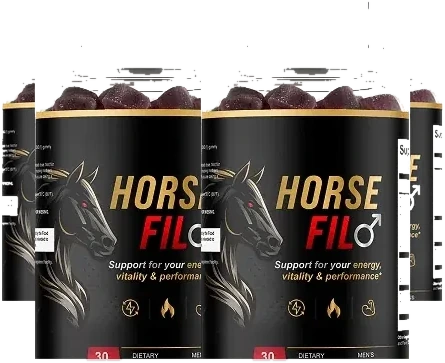
Horsefil is a men's vitality gummy rather than a glucose formula — and we would rather you checked its Supplement Facts panel than took anyone's word for it, ours included.
See Horsefil at the Official StoreMiss three: reading too much into glucose sensor screenshots
Continuous glucose monitors turned this category into a spectator sport, and the screenshots are persuasive in a way numbers in a paragraph are not. They also get over-read constantly.
Consumer sensors measure glucose in interstitial fluid rather than blood, which introduces a lag of several minutes and a genuine margin of error. That error is wide relative to the small differences people attribute to a capsule. Two sensors worn simultaneously by the same person can disagree noticeably, and sleeping on one can produce a false low that has nothing to do with physiology.
Then there is what is being compared. A meal on Tuesday and a similar meal on Thursday are not a controlled comparison: sleep, stress, activity, hydration, the exact composition of the plate and the time of day all moved. Attributing the difference between two curves to the supplement taken with one of them requires ignoring every other variable that changed.
Used properly, these sensors are genuinely useful. They are good at showing you that a particular food produces a bigger response than you assumed, or that a walk after eating changes the shape of your afternoon. Those are large, repeatable effects. Detecting a small supplement effect is a different task, and consumer hardware is not precise enough for it.
Miss four: assuming testing proves effectiveness
Threads are rightly enthusiastic about third-party testing, and then quietly draw the wrong conclusion from it.
Independent testing verifies identity, potency and purity: that the powder is the plant it claims to be, that the amount is close to the label, that it is not contaminated with heavy metals or undeclared pharmaceuticals. In a category with a documented history of adulteration, that matters enormously and is worth paying for.
What it does not do is tell you the ingredient works. Efficacy is a clinical question, answered by trials in people, and no certificate of analysis addresses it. A rigorously tested capsule of an ingredient with weak evidence is exactly that: a clean, honest, verified dose of something that may well do nothing. Both facts are true at once, and threads tend to collapse them into a single verdict.

Miss five: assuming the recommendations are disinterested
The last one is uncomfortable to write, because it applies to this page too.
Supplement discussion is a commercially valuable place, and it attracts commercial participation. Affiliate links get posted without disclosure. Brand-adjacent accounts join conversations. Enthusiastic early recommendations sometimes come from people with a stake in the outcome. None of that means every recommendation is compromised, but the default assumption of neutrality is unearned.
Our own position is exactly this. This site is an independent affiliate publisher: if you buy through our links we may earn a commission. That is disclosed in the footer of every page, and it is a reason to check what we say against the sources we cite rather than take it on trust. The right posture toward any recommendation, ours included, is to ask who benefits and then go and read the label.
A thread is a good place to learn what went wrong for other people and a bad place to learn what will work for you. Those are different questions, and only one of them can be answered by anecdote.
The claims, side by side
Here is the summary version: the recurring claims, the part of each that holds up, and the part that does not.
| Common claim | What is true in it | What it misses | Evidence strength |
|---|---|---|---|
| Berberine is nature's version of a GLP-1 drug | Berberine has the best evidence in the category | Different mechanism, far smaller effect, real drug interactions | Comparison unsupported |
| It worked for me within a week | The experience is real and worth reporting | No control, multiple simultaneous changes, regression to the average | Anecdotal |
| My sensor proves it flattened the curve | Sensors show large effects well | Margin of error exceeds the effect being claimed | Weak for small differences |
| It is third-party tested, so it works | Testing is valuable and rare enough to reward | Purity is not efficacy | Conflates two questions |
| Cinnamon is a cheap alternative | Cinnamon is genuinely cheap and widely studied | Trial results conflict; cassia carries a coumarin ceiling | Inconsistent |
| Everyone here has no agenda | Most contributors are sincere | Undisclosed affiliate and brand participation is common | Varies by thread |
What best blood sugar supplement reddit threads are actually good for
Given all that, the useful move is not to stop reading best blood sugar supplement reddit threads. It is to use them for the jobs they genuinely do well.
Use threads to build a shortlist and to find disqualifiers. They are excellent at surfacing which brands use proprietary blends, which products taste unbearable, which ones cause stomach trouble, and which have quietly changed their formula. Those are observations, and observations are what crowds are good at.
Then take the shortlist somewhere else. Check the doses on the panel against the amounts used in published trials. Check whether the ingredient has human data or only cell and animal work. Check for independent testing. Check the interaction list against anything you already take. None of those steps needs a stranger's opinion, and together they will resolve most of what a thread argues about for four hundred comments.
And keep the ranking honest. If you are hunting for the best natural blood sugar supplement, the plate, the walk after dinner and a full night's sleep all outrank the bottle, and no thread consensus changes that ordering.
What this article cannot tell you
The same standard applies here, so let us be explicit about the limits of this page.
It cannot tell you what is right for you. We do not know your medications, your readings or your history, and general information is not personal advice. Anything you are considering alongside prescribed medication is a conversation for the person who prescribed it.
It cannot verify the accounts it describes. We are characterising patterns that recur across public discussion, not auditing individual posts, and we have deliberately not attached numbers to any of it because we have not counted.
It cannot claim that any supplement treats, cures, prevents or reverses a disease, because none of them do. Everything discussed here is studied as support for glucose already within a healthy range.
And it is not neutral. We earn a commission if you buy through our links. The correct response is to check our citations, read the label, and decide for yourself.
Medical note: this article is general information, not medical advice. Never stop, reduce or substitute a prescribed medication on the strength of anything you read in a forum thread or on this page. If you take glucose-lowering medication or an anticoagulant, speak to a healthcare professional before adding any supplement — berberine in particular can alter how other medicines are metabolised.
Where Horsefil fits, and where it does not
In the spirit of the section above: Horsefil is a men's vitality gummy, not a glucose supplement. It combines L-citrulline and L-carnitine with maca root, panax ginseng and rhodiola rosea, and it is sold for everyday energy, stamina and performance support. If you arrived looking for a glucose formula, this is not one, and we would rather say so than blur the line.
The overlap worth naming is that men often arrive at glucose threads chasing a symptom rather than a number — the flat afternoons, the energy that disappears after lunch. That is a legitimate thing to want help with, and it points at a different shelf. Our piece on L-citrulline and panax ginseng for men's energy covers what the human data supports there, with the same willingness to say where it runs out.
If the timing question is what brought you here, our companion piece on morning versus evening dosing works through when these ingredients are actually studied to be taken.
Frequently asked questions
Is berberine really nature's Ozempic?
No, and the comparison is a category error. Berberine is a plant alkaloid studied mainly for effects on the AMPK signalling pathway, while GLP-1 medicines are prescription drugs acting on a completely different system with far larger and better documented effects. Berberine does have the strongest evidence base of the common glucose-support ingredients, which is a genuine point, but it is not a substitute for a prescribed medicine and should not be treated as one.
Why are personal supplement results unreliable evidence?
Because almost nobody changes one variable at a time. People usually start a supplement in the same week they start eating better, walking more or sleeping properly, and readings that were unusually high tend to drift back toward average on their own. Add the expectation of improvement and there is no way to separate the capsule from everything else that changed.
Does third-party testing mean a supplement works?
No. Independent testing verifies that the ingredient in the bottle is what the label says, at roughly the stated amount, without contaminants. That is genuinely valuable and worth paying for. It says nothing at all about whether that ingredient produces a useful effect in the body, which is a separate question answered only by clinical trials.
Are continuous glucose monitor readings from forum posts trustworthy?
Treat them as rough signals rather than measurements. Consumer sensors read interstitial fluid rather than blood, which introduces a lag, and they carry a margin of error that is wide relative to the small changes people attribute to supplements. Two sensors worn at once can disagree noticeably, so a modest difference across a few meals is well inside the noise.
Scientific references
- NIH MedlinePlus — Evaluating health information
- NIH NCCIH — Diabetes and Dietary Supplements: What the Science Says
- Yin J. et al. — Efficacy of berberine in patients with type 2 diabetes, Metabolism (2008)
- Mayo Clinic — Blood glucose testing: why, when and accuracy
- Harvard T.H. Chan School of Public Health — Vitamins and Minerals
Check the label, then decide
Five named actives for everyday energy and stamina support, printed on the panel rather than pooled into a proprietary blend. Read it and judge for yourself.
Check Horsefil at the Official Store