Blood Sugar Herbs Supplements: What Cinnamon, Fenugreek and Gymnema Can and Cannot Do
Quick Answer: Do Blood Sugar Herbs Supplements Actually Do Anything?
Blood sugar herbs supplements almost always come down to three plants: cinnamon, fenugreek and gymnema sylvestre. The honest summary is that all three have human trial data pointing at small effects on fasting or post-meal glucose, that the results conflict from study to study, and that the amounts used in research are usually much larger than the amounts tucked into a multi-ingredient blend. None of them is a treatment for a disease, and none of them outruns what you eat and how much you move.
- Most studied: cinnamon — and also the most contradictory results.
- Dose is the whole game: trials use grams of cinnamon and fenugreek, not a milligram dusting.
- Hard limit: support for glucose already in a healthy range, never a substitute for care.
Why these three herbs own the shelf
Walk down any supplement aisle, or scroll any marketplace listing, and the glucose-support category collapses into a small handful of names. Cinnamon, fenugreek and gymnema sylvestre turn up again and again, usually alongside chromium, berberine and magnesium. There is a reason for that, and it is only partly about evidence.
Each of the three has a plausible, describable mechanism, which makes them easy to write marketing copy about. Cinnamon contains polyphenols that appear to influence insulin signalling in cell and animal work. Fenugreek seed is roughly a quarter soluble fibre and also contains an unusual amino acid, 4-hydroxyisoleucine, which has been studied for its effect on insulin secretion. Gymnema sylvestre contains gymnemic acids, which have the genuinely odd property of temporarily switching off the tongue's ability to taste sweetness.
All three also carry a long history of traditional use, which is often presented as if it were clinical evidence. It is not. Traditional use tells you a plant was available, tolerated and believed to help. It does not tell you whether it moves a glucose reading in a randomised trial. When people go looking for the best herbal supplement for blood sugar, that distinction is the single most useful thing to keep hold of.
Cinnamon: the most studied and the least consistent
Cinnamon has more human data behind it than the other two combined, and it is still the hardest to summarise. Some randomised trials report small reductions in fasting glucose; others report essentially nothing. Pooled analyses have landed on opposite conclusions depending on which studies they included and how they handled the differences between them.
Several things drive that mess. Trials have used different species, mostly cassia but sometimes Ceylon, and the polyphenol content varies between them. They have used whole ground bark in some cases and aqueous extracts in others, which are not interchangeable. Participants have ranged from healthy volunteers to people with established metabolic conditions, and baseline matters enormously: it is far easier to move a number that starts high than one that starts normal. Study lengths have run from a few weeks to a few months, which is short for something being framed as a long-term habit.
There is a safety detail here that marketing rarely mentions. Cassia cinnamon, the cheap and common kind, contains coumarin, a compound that has been linked to liver stress at sustained high intakes. European food safety bodies have set tolerable daily intake guidance for coumarin precisely because ordinary culinary amounts can approach it in small adults. Ceylon cinnamon contains far less. If a label does not say which species is in the capsule, that is a real information gap, not a nitpick.
Fenugreek: the fibre is doing much of the work
Fenugreek is the one where the mechanism is least mysterious. A large share of the seed is galactomannan, a viscous soluble fibre. Viscous fibre slows gastric emptying and the rate at which carbohydrate is presented to the small intestine, which flattens the rise in glucose after a meal. That is a well-understood physiological effect and it is not unique to fenugreek; oat beta-glucan and psyllium do something similar.
Human trials of fenugreek seed powder have generally used gram-level daily amounts, often split across meals, and several report modest improvements in glucose measures. The trials tend to be small, frequently conducted in a single centre, and not always well blinded, which is a real limitation given how strongly expectation influences health behaviour.
The practical consequence is easy to miss. If the fibre is doing most of the work, then a concentrated extract standardised for 4-hydroxyisoleucine and stripped of its fibre is not the same product as ground seed, even though both say fenugreek on the front. And a few hundred milligrams of anything cannot deliver a fibre effect. Fibre works by bulk.
Reading labels rather than headlines?
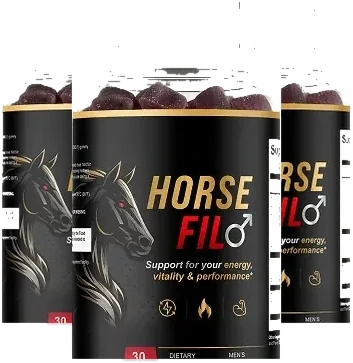
Horsefil is a men's vitality formula, not a glucose product — but it is built on the same principle this article argues for: name the ingredient, show the evidence, and let the label speak.
See Horsefil at the Official StoreGymnema sylvestre: a strange effect and a thin file
Gymnema is the most interesting of the three and the least supported. Its gymnemic acids bind to sweet-taste receptors on the tongue, and the effect is immediate and unmistakable: chew a gymnema leaf, then eat something sugary, and the sweetness is largely gone while the texture remains. That is a real, reproducible phenomenon.
The leap that marketing makes is from taste receptors to blood glucose, and that leap is not well supported. There is a hypothesis that gymnemic acids also interact with sugar transporters in the intestine, and there is some preclinical work behind it, but the human trial base is small, old in places, and often poorly controlled. Several of the frequently cited studies were not randomised or blinded at all.
What gymnema may plausibly do is behavioural. If sweet things taste like nothing for the next half hour, dessert is less appealing. That is a legitimate mechanism for eating less sugar, and it is also not the mechanism the label is usually implying.
Doses, forms and evidence strength side by side
The table below is the version of this article most people actually need. It compares the three herbs on the form used in research, the rough daily amounts those trials worked with, what the data supports, and how confident anyone should be about it.
| Herb | Form used in trials | Typical daily amount in studies | What the evidence supports | Evidence strength |
|---|---|---|---|---|
| Cinnamon (cassia) | Ground bark or aqueous extract | Gram-level, often split across meals | Small, inconsistent effects on fasting glucose | Moderate volume, low consistency |
| Cinnamon (Ceylon) | Ground bark | Gram-level | Less studied; lower coumarin content is the main argument for it | Limited |
| Fenugreek seed | Ground whole seed | Gram-level, with meals | Post-meal glucose blunting, largely via soluble fibre | Modest, small trials |
| Fenugreek extract | Standardised extract | Milligram-level | Not equivalent to seed powder; fibre effect is absent | Weak |
| Gymnema sylvestre | Standardised leaf extract | Milligram-level | Reliable blunting of sweet taste; glucose effects unclear | Weak, poorly controlled |
Two things jump out of that table. The herbs with the better data are the ones taken in gram quantities, which almost never fit into a capsule blend alongside eight other ingredients. And the forms that fit comfortably into a blend are the ones with the thinnest support.
A mechanism is a hypothesis about why something might work. A trial is a test of whether it did. Most glucose-support marketing sells you the first and quietly implies the second.
How to read a blood sugar herbs supplements label
Once you know the doses that research used, evaluating blood sugar herbs supplements becomes a fairly mechanical exercise. Four checks catch most of what matters. Once a label survives that check, the only question left is when to take it, which we cover in our guide to morning versus evening dosing.
Check the milligrams, not the ingredient list. A front label that names six botanicals tells you nothing. Turn the bottle over and read the Supplement Facts panel. If cinnamon appears at a small milligram figure, it is there for the ingredient list, not for an effect.
Check for a proprietary blend. If several ingredients are grouped under one total weight, you cannot know how much of any single one you are getting, and the cheapest ingredient is almost always the bulk of it. This is the most common way a label looks impressive while telling you nothing.
Check the species and the standardisation. Cassia or Ceylon. Whole seed or extract. Standardised to what percentage of which marker compound. These details separate a product built from the literature from one built from a marketing brief.
Check for third-party testing. Botanical supplements have a documented history of adulteration and misidentification. An independent certificate of analysis is worth more than any claim on the front of the bottle. If you are searching for the best natural blood sugar supplement, testing evidence should outrank star ratings every time.
What blood sugar herbs supplements cannot do
This is the section most articles in this category skip, so here it is plainly. These are also the limits most often glossed over in the supplement threads people rely on for recommendations.
They cannot treat, prevent, cure or reverse diabetes or any other disease. That is not a legal formality, it is an accurate description of the evidence. The effects reported in the better trials are small, and small effects on a healthy person's glucose are not a therapy.
They cannot replace medication, and combining them with medication without telling a clinician is genuinely unwise. Herbs that influence glucose can stack with drugs that do the same thing, and that combination can push readings lower than intended. Fenugreek can also interact with anticoagulants, and cinnamon in large sustained amounts raises the coumarin question above.
They cannot outrun diet composition, portion size, sleep debt or a sedentary week. Every trial in this field was conducted on top of whatever participants were already eating and doing, and the herb was always the smaller variable.
And they cannot be assessed from the finished product's marketing. A blend containing five studied ingredients has not itself been studied. That is true of every multi-ingredient formula in this category, including the ones we write about.
Medical note: this article is general information, not medical advice. If you are managing blood glucose, take insulin or any glucose-lowering medication, are pregnant, or take anticoagulants, speak to a healthcare professional before adding any botanical supplement. Several of these herbs can interact with prescription medicines.
Where Horsefil fits, and where it does not
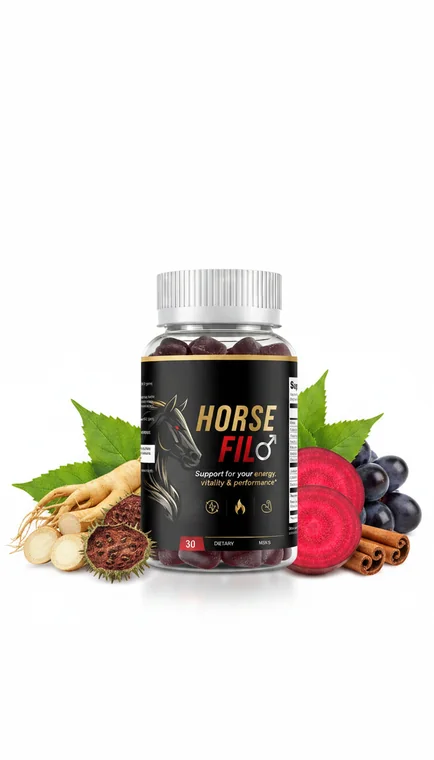
We should be straight about this, because the alternative is the kind of copy this article is criticising. Horsefil is a men's vitality gummy, built around L-citrulline and L-carnitine with maca root, panax ginseng and rhodiola rosea. It is formulated for everyday energy, stamina and performance support. It is not a glucose formula and we would not present it as one.
The honest overlap is narrower and more interesting. Panax ginseng, one of its adaptogens, has its own separate research literature on glycaemic measures, and steady daytime energy is partly a story about how well your body handles fuel. If your reason for searching out the best blood sugar supplement is really flat afternoons and unreliable energy, that is worth naming, because it points at a different set of answers.
If timing is the part you are unsure about, our companion piece on taking a glucose-support supplement around meals covers when these ingredients are actually studied to be taken, and why the hour matters more for some of them than others.
Frequently asked questions
Do blood sugar herbs supplements work?
In small and inconsistent ways for some people. Human trials of cinnamon, fenugreek and gymnema report modest effects on fasting or post-meal glucose, but results differ a lot between studies and the doses used are often far larger than a typical capsule contains. These herbs are studied as support for glucose that is already in a healthy range, not as a treatment for any disease.
Which of the three herbs has the strongest evidence?
Cinnamon has the largest number of human trials, but volume is not the same as consistency. Pooled analyses of cinnamon disagree with one another, partly because studies used different species, doses and participants. Fenugreek's effect appears to lean heavily on its soluble fibre content, and gymnema has the smallest evidence base of the three.
How much cinnamon did the studies actually use?
Most cinnamon trials used gram quantities of powdered bark per day, taken with food and often split across meals, rather than the milligram amounts common in blends. The species matters too: cassia cinnamon contains far more coumarin than Ceylon cinnamon, which is the reason large daily doses over long periods are not a casual decision.
Is Horsefil a blood sugar supplement?
No. Horsefil is a men's vitality gummy built around L-citrulline, L-carnitine, maca root, panax ginseng and rhodiola rosea. Panax ginseng has its own separate research on glucose measures, but Horsefil is formulated and sold for everyday energy, stamina and performance support rather than glucose control. If glucose is your main concern, that belongs in a conversation with a clinician.
Scientific references
- NIH NCCIH — Cinnamon: Usefulness and Safety
- NIH NCCIH — Diabetes and Dietary Supplements: What the Science Says
- Allen R.W. et al. — Cinnamon use in type 2 diabetes, Annals of Family Medicine (2013)
- Mayo Clinic — Type 2 Diabetes: Symptoms and Causes
- Harvard T.H. Chan School of Public Health — Fiber and its role in glucose response
Horsefil: the label, in full
Five named actives, no proprietary blend hiding the amounts, and the evidence for each one laid out plainly. If the label is what you judge a supplement by, start there.
Check Horsefil at the Official Store