L-Citrulline and Panax Ginseng for Men's Energy and Blood Flow: What the Research Actually Shows
Quick Answer: Do L-Citrulline and Ginseng Help Men's Energy and Blood Flow?
To a modest, real extent for the right person and at the right dose. Randomised trials show that L-citrulline raises plasma arginine and supports nitric-oxide production, with measurable effects on blood flow and exercise performance — though the studied doses are usually several grams a day. Separately, panax ginseng has multiple trials behind it for reducing fatigue and, in some studies, supporting erectile function. Neither is a treatment for a medical condition, and neither works overnight.
- Strongest finding: L-citrulline supports the nitric-oxide blood-flow pathway.
- Dose that matters: roughly 3–6 g/day of L-citrulline in many studies.
- Key caveat: support, not a cure — see a clinician for persistent symptoms.
Why L-citrulline, and why the dose is so often missed
L-citrulline is interesting because it is a more effective way to raise the body's L-arginine levels than taking L-arginine directly — more of it survives digestion and reaches the bloodstream. Once there, arginine feeds nitric-oxide production, which relaxes and widens blood vessels. That is the mechanism tied in research to improved blood flow, better exercise performance, and, in one small pilot trial, firmer erections in men with mild difficulty.
The catch is dose. The trials that show an effect generally use several grams of L-citrulline per day, or larger amounts of citrulline malate. Many consumer products — including gummies — contain far less, which is exactly why the milligram figure on the label matters more than the marketing around it.
How the citrulline → arginine → nitric oxide pathway actually works
The mechanism is worth understanding properly, because it explains both why the ingredient is plausible and why the dose is non-negotiable. Nitric oxide is a short-lived signalling gas produced inside the cells lining your blood vessels. When it is released, it relaxes the smooth muscle in the vessel wall, the vessel widens, and blood flow through it increases. In penile tissue this is not a peripheral detail — nitric oxide released from nerve endings and endothelium is the principal signal that initiates and sustains an erection, which is why the pathway is the target of prescription treatments as well as supplements (Toda et al., Pharmacology & Therapeutics, 2005).
The enzyme that makes nitric oxide uses L-arginine as its raw material. So the obvious move would be to swallow L-arginine — except that a large share of oral arginine is broken down in the gut and liver before it reaches the circulation. L-citrulline takes a detour around that problem: it is absorbed largely intact, travels to the kidneys, and is converted there into arginine. The result is that oral citrulline raises plasma arginine more reliably, and for longer, than an equivalent dose of arginine itself (Schwedhelm et al., British Journal of Clinical Pharmacology, 2008). That single pharmacokinetic fact is the entire reason citrulline replaced arginine in serious formulations.
It also sets a floor. The conversion is dose-dependent, and the plasma arginine rise that the research describes follows gram-level intakes. A few hundred milligrams does not produce a small version of the effect so much as no reliable effect at all, which is the single most useful thing to know when reading a label in this category.
What the L-citrulline trials actually measured
Most citrulline research is not about sexual function at all — it is exercise science, and reading it honestly means noticing what the outcome measures were. Systematic review evidence in resistance-trained adults indicates that citrulline malate supplementation can produce a small improvement in muscular strength and endurance outcomes, though effects vary considerably between studies and protocols (Aguiar et al., Journal of Dietary Supplements, 2022). A separate review looking at recovery-related outcomes found that citrulline supplementation was associated with reduced ratings of perceived exertion and muscle soreness after exercise, with less consistent effects on blood lactate (Rhim et al., Journal of Sport and Health Science, 2020).
The sexual-function evidence is much thinner: essentially one small single-blind pilot study in men with mild erectile difficulty, using 1.5 g of L-citrulline daily for a month, which reported an improvement in erection hardness scores in about half of participants (Cormio et al., Urology, 2011). One small pilot is a reason to be interested, not a reason to be confident. We look at how that study sits alongside the rest of the literature in our review of what the erectile dysfunction supplement trials show.
The panax ginseng side of the story
Panax ginseng is one of the better-studied adaptogens. A number of randomised controlled trials and reviews have looked at it for fatigue, cognition and erectile function, and the overall picture is modest but real: some benefit for fatigue and perceived energy, and mixed-but-encouraging results for erectile function in particular. As with citrulline, effects build over weeks rather than appearing after a single dose.
Ginseng is not free of considerations, though. It can affect blood pressure and blood sugar and can interact with anticoagulants and some other medications, which is a genuine reason to check with a clinician before starting if you take anything regularly.
How much panax ginseng, and for how long
Ginseng trials in this area typically run for four to twelve weeks and use standardised extracts in the hundreds of milligrams per day, which is a dose range a chewable or capsule can genuinely deliver — the opposite of the citrulline situation. A Cochrane review of ginseng for erectile dysfunction concluded that there may be an improvement in erectile function compared with placebo, but rated the certainty of that evidence as low, on the basis of small trials with methodological limitations (Lee et al., Cochrane Database of Systematic Reviews, 2021). An earlier randomised, double-blind, placebo-controlled crossover trial of Korean red ginseng in men with erectile dysfunction reported improved scores on a standard erectile function questionnaire relative to placebo (de Andrade et al., Asian Journal of Andrology, 2007).
The practical reading is that ginseng is the ingredient in this pairing most likely to be present at a researched amount in a finished consumer product, and citrulline is the one most likely to be present as a gesture. That asymmetry is a large part of why we wrote a separate piece on gummies versus capsules and the dose room each format allows.
What the evidence supports, in one table
| Ingredient | What the research supports |
|---|---|
| L-citrulline | Supports nitric-oxide blood flow and exercise performance at multi-gram doses |
| Panax ginseng | Modest benefit for fatigue; mixed but promising for erectile function |
| L-carnitine | Reasonable evidence for reduced fatigue; some male-fertility data |
| Rhodiola rosea | Promising for stress-related fatigue; study quality varies |
| Maca root | Small studies on libido; limited overall evidence |
What the evidence shows, and what it does not
What it shows. L-citrulline reliably raises plasma arginine and supports nitric-oxide production at gram-level doses, with measurable effects on exercise performance and perceived exertion. Panax ginseng has repeated randomised trials for fatigue and erectile function, with a low-certainty but consistent direction of effect. Both act over weeks.
What it does not show. It does not show that any finished multi-ingredient product works, because blends are almost never trialled as sold. It does not show that either ingredient treats a medical condition. It does not show that sub-gram citrulline does anything measurable. And it does not show an acute, same-day effect for either ingredient — anything producing one within an hour is behaving pharmacologically, which in this category is a warning sign rather than a selling point. The same reasoning applies across the shelf, as we set out in what actually works in male enhancement pills.
How to check a label in sixty seconds
- Find the L-citrulline figure and read the unit. Grams put it in the studied range; a few hundred milligrams does not. If the number is absent, stop.
- Check the ginseng extract is standardised. "Panax ginseng root" tells you a species. A standardised extract with a stated amount tells you a dose.
- Reject proprietary blends. A blend total tells you nothing about the individual amounts inside it, and the cheap ingredients are usually doing the volume work.
- Read the serving size, not the bottle. Per-serving amounts often assume two or three pieces; a 60-count bottle at three a day is a twenty-day supply.
- Work out the cost per month at that dose. The arithmetic is the same one we run in testosterone booster cost per month, explained.
Common mistakes with these two ingredients
- Swapping in L-arginine because it sounds equivalent. It is the same pathway but the worse oral option, for the pharmacokinetic reasons above.
- Judging either ingredient after a week. The trials run four to twelve weeks; a short trial of your own tells you almost nothing.
- Assuming an ingredient's evidence transfers to a blend. Evidence attaches to doses, not to ingredient lists.
- Combining ginseng with medication without asking. It can affect blood pressure and blood glucose and interacts with anticoagulants.
- Expecting a supplement to substitute for a diagnosis. Persistent symptoms need assessment, not a stronger formula.
Where the evidence stops
Two honest limitations are worth stating plainly. First, a finished multi-ingredient gummy is not the same as any single studied dose — the ingredients can have evidence while the specific product has never been trialled. Always check a label's L-citrulline and ginseng amounts against what the studies actually used. Second, none of this treats a medical condition. Persistent erectile difficulty, low energy or low libido can have treatable underlying causes, and a supplement is not the answer — a clinician is.
Medical note: this article is general information, not medical advice. Speak to a healthcare professional before starting any supplement, especially if you take medication — panax ginseng and L-citrulline can affect blood pressure and interact with several drugs, including nitrates and ED medication.
Scientific references
- Schwedhelm E. et al. — Pharmacokinetic and pharmacodynamic properties of oral L-citrulline and L-arginine: impact on nitric oxide metabolism, British Journal of Clinical Pharmacology (2008)
- Cormio L. et al. — Oral L-citrulline supplementation improves erection hardness in men with mild erectile dysfunction, Urology (2011)
- Toda N. et al. — Nitric oxide and penile erectile function, Pharmacology & Therapeutics (2005)
- Aguiar A.F. et al. — Effects of citrulline malate supplementation on muscle strength in resistance-trained adults: a systematic review and meta-analysis, Journal of Dietary Supplements (2022)
- Rhim H.C. et al. — Effect of citrulline on post-exercise rating of perceived exertion, muscle soreness, and blood lactate levels: a systematic review and meta-analysis, Journal of Sport and Health Science (2020)
- Lee H.W. et al. — Ginseng for erectile dysfunction, Cochrane Database of Systematic Reviews (2021)
- de Andrade E. et al. — Study of the efficacy of Korean Red Ginseng in the treatment of erectile dysfunction, Asian Journal of Andrology (2007)
- Ishaque S. et al. — Rhodiola rosea for physical and mental fatigue: a systematic review, BMC Complementary and Alternative Medicine (2012)
- NIH Office of Dietary Supplements — Dietary Supplements for Exercise and Athletic Performance
- NIH NCCIH — Asian Ginseng: What You Need To Know
Frequently asked questions
Does L-citrulline improve blood flow?
To a modest, real extent at adequate doses. Randomised trials show that supplemental L-citrulline raises plasma L-arginine and supports nitric-oxide production, with measurable effects on blood flow and exercise performance. The doses used are typically several grams per day, so the amount on a label matters.
How much L-citrulline is needed?
Trials commonly use roughly 3 to 6 grams of L-citrulline per day, and citrulline malate studies often use more. Because the effect depends on reaching a meaningful dose, the milligram amount printed on any label is the number worth checking.
What does panax ginseng do?
Panax ginseng is an adaptogen with multiple randomised trials for reducing fatigue and, in some studies, supporting erectile function. Effects are generally modest and results are mixed. It can affect blood pressure and interact with some medications, so it is worth flagging to a clinician.
Can a supplement replace treatment for erectile dysfunction?
No. Erectile dysfunction and low testosterone are medical conditions that can need proper assessment and treatment, and a dietary supplement is not a substitute. L-citrulline and ginseng are studied for support, not as a cure. If you have persistent symptoms, see a clinician.
How long do L-citrulline and panax ginseng take to work?
Plan on weeks, not days. The ginseng trials in this area typically run four to twelve weeks, and citrulline's effects on blood flow and exercise outcomes are studied over repeated daily dosing rather than as a single acute dose. Anything producing a noticeable effect within an hour is not behaving like either of these ingredients.
Is L-arginine a good substitute for L-citrulline?
It is the same pathway but the less effective oral option. A large share of swallowed L-arginine is broken down in the gut and liver before reaching the circulation, whereas L-citrulline is absorbed largely intact and converted to arginine in the kidneys, raising plasma arginine more reliably. That is why citrulline replaced arginine in most serious formulations.
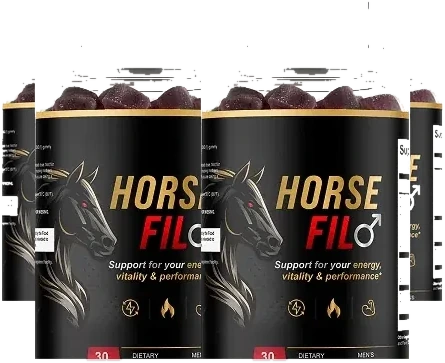
See how Horsefil puts this together
L-citrulline, L-carnitine and three adaptogens in one daily gummy — with every ingredient and its evidence laid out.
Read the Horsefil Review