Male Enhancement Gummies vs Capsules: What the Evidence Actually Says About Format
Quick Answer: Are Male Enhancement Gummies as Good as Capsules?
For most ingredients the format changes the dose you can fit, not the biology. A gummy and a capsule containing the same verified milligram amount of the same extract should behave much the same in the body. The real difference is capacity: a capsule can hold one to two grams of powder, while a gummy has to carry its active ingredients in a sweetened gel base, so it usually holds less. That matters enormously for gram-dose ingredients like L-citrulline and very little for milligram-dose extracts like panax ginseng. Format is a compliance decision; dose is the evidence decision.
- Same dose, same ingredient: format is unlikely to be the deciding factor.
- Where gummies lose: gram-dose amino acids rarely fit in a chewable.
- Where gummies win: people actually take them, every day, for months.
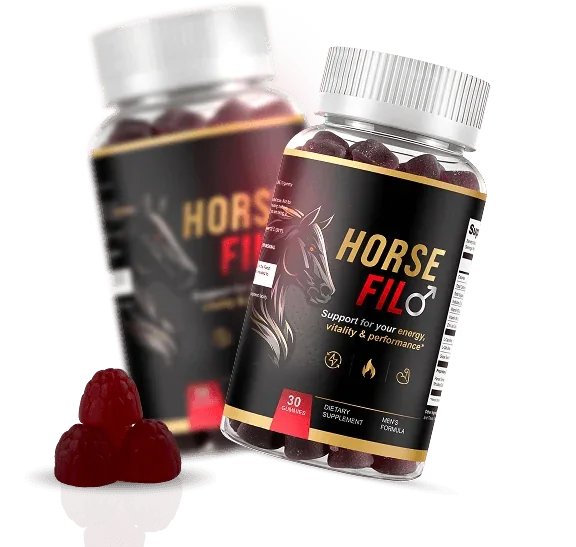
What male enhancement gummies actually are
A male enhancement gummy is a chewable dietary supplement, usually built on a pectin or gelatin base, that carries amino acids and botanical extracts marketed for men's energy, libido, stamina or blood flow. The common ingredient list is short and repetitive across brands: L-citrulline or L-arginine for the nitric-oxide pathway, panax ginseng, maca root, tongkat ali, and sometimes L-carnitine or rhodiola. None of these are drugs. None of them are approved to treat any condition. They are food-category ingredients with a research literature of varying quality behind each one.
The word "gummy" describes nothing about efficacy. It describes a manufacturing choice, and that choice carries a specific and measurable trade-off that almost no marketing page discusses honestly. Understanding that trade-off is the whole point of this article, and it is the same trade-off whether the label says gummy, chewable, capsule, softgel, tablet or drops.
Do gummies absorb better than capsules?
There is no good human evidence that a gummy is meaningfully better absorbed than a capsule for the ingredients used in this category. This is worth stating plainly because "better absorption" is the single most common claim made for chewables, and it is largely marketing rather than a finding.
The reasoning behind the claim is not absurd. Chewing begins breaking a gummy down in the mouth, and a dissolved or pre-suspended active does not have to wait for a capsule shell to open in the stomach. For a few specific nutrients — fat-soluble vitamins in an oil base, for instance — the delivery matrix genuinely changes how much gets absorbed. But amino acids like L-citrulline are already highly bioavailable when swallowed as powder in a capsule. Pharmacokinetic work on oral L-citrulline shows it is absorbed efficiently and converted to L-arginine, raising plasma arginine more reliably than oral L-arginine itself does, without any need for a special delivery format (Schwedhelm et al., Br J Clin Pharmacol, 2008). If the amino acid is already getting in, a gummy has no absorption problem left to solve.
The honest summary: assume format does not change absorption for this ingredient class unless a brand shows you a study on its own product. Almost none can.
Gummies vs capsules vs drops: the real trade-off is dose room
The difference that actually shows up in the evidence is how much active ingredient each format can physically carry. A gummy is mostly gelling agent, sweetener, water, acid and flavour. The active ingredients have to fit into what is left, and they have to survive being cooked into a gel and stored at room temperature without wrecking the taste or texture. A capsule has no such constraint: it is a shell around a powder, and a large capsule can hold well over a gram.
That constraint collides directly with the dosing in the research. The trials behind L-citrulline generally use several grams a day. A single pilot study in men with mild erectile difficulty used 1.5 g of L-citrulline daily and reported an improvement in erection hardness scores in a modest number of participants (Cormio et al., Urology, 2011). Fitting 1.5 g of a single amino acid into a palatable gummy is difficult; fitting the 3–6 g used in blood-flow and exercise research is not realistic in one or two chewables.
Which formats suit which ingredients
| Ingredient type | Typical studied dose | Realistic in a gummy? |
|---|---|---|
| L-citrulline / L-arginine | Grams per day | Difficult — check the milligram figure closely |
| Panax ginseng extract | Hundreds of milligrams | Yes, comfortably |
| Tongkat ali (standardised) | Hundreds of milligrams | Yes |
| Maca root extract | Hundreds of milligrams to grams | Sometimes, at the lower end |
| Rhodiola rosea extract | Hundreds of milligrams | Yes |
Read that table as a filter rather than a verdict. A gummy carrying a properly standardised botanical extract at a researched milligram dose is on solid ground. A gummy claiming to deliver an amino acid benefit at a fraction of the gram doses used in trials is making a claim the format cannot support. This is the same reasoning we apply when reading a natural testosterone booster label: the number, not the noun, is what tells you whether a product can plausibly do anything.
Check the milligram figure before the format
Horsefil publishes its per-serving amounts on the label. Compare them against the doses in this article rather than against the marketing.
See the Horsefil Label at the Official StoreThe label-accuracy problem is worse in gummies
Gummies have a documented quality-control problem that capsules largely do not, and it is the strongest evidence-based reason to be careful with the format. The clearest published demonstration comes from outside this category: an analysis of melatonin gummies sold in the United States found that the great majority contained a quantity of melatonin that differed substantially from the label, with some products containing far more than declared and one containing none of the labelled ingredient at all (Cohen et al., JAMA, 2023).
That study is about melatonin, not about men's supplements, and it should not be stretched further than it goes. What it demonstrates is a manufacturing reality rather than an ingredient-specific one: dosing an active accurately into a cooked gel matrix, and keeping it stable on a shelf, is harder than filling a capsule with a weighed powder. Any category sold as a gummy inherits that difficulty. It is a reason to prefer brands that publish third-party batch testing, and a reason to treat an undisclosed "proprietary blend" on a gummy label as a genuine red flag rather than a trade secret.
Are male enhancement gummies a scam?
The format is not a scam, but a real and documented subset of products in this category is dangerous, and the distinction matters. The serious risk is not that a gummy underdelivers — it is adulteration. An analysis of US Food and Drug Administration warnings found that dietary supplements marketed for sexual enhancement were among the categories most frequently found to contain unapproved pharmaceutical ingredients, most often sildenafil or its analogues, undeclared on the label (Tucker et al., JAMA Network Open, 2018).
That is a specific, checkable hazard rather than a vague worry. An undeclared PDE5 inhibitor can interact dangerously with nitrate medication used for heart conditions. The practical defence is unglamorous: buy from brands that disclose every ingredient and its amount, be suspicious of any product that produces a drug-like effect within an hour, and check the FDA's public tainted-products list before trying an unfamiliar brand. A product promising results in thirty minutes is describing a drug, and it may well contain one.
What the evidence shows, and what it does not
What it shows. Several ingredients common to this category have genuine randomised evidence. A Cochrane review of ginseng for erectile dysfunction found low-certainty evidence of a possible improvement in erectile function compared with placebo, while noting that trials were small and of limited quality (Lee et al., Cochrane Database of Systematic Reviews, 2021). A broader systematic review and meta-analysis of herbal supplements for erectile dysfunction reached a similarly qualified conclusion: some signal for a handful of botanicals, on a thin and heterogeneous evidence base (Borrelli et al., Drugs, 2018). We go through this literature ingredient by ingredient in our review of what the erectile dysfunction supplement trials actually show.
What it does not show. There is no trial of a finished multi-ingredient gummy demonstrating that the product works. Evidence attaches to ingredients at studied doses, not to blends, and a combination of five ingredients each at a fraction of its researched amount does not inherit the evidence of any of them. There is also no evidence that any supplement in this category enlarges anything, and no supplement treats erectile dysfunction — a condition with well-established medical causes and treatments. If you want the evidence for the two ingredients this format leans on hardest, we cover L-citrulline and panax ginseng for men's energy and blood flow separately.
How to choose between a gummy and a capsule, practically
Work through four questions in order, and the decision usually makes itself.
- Does the label disclose every ingredient amount? If it hides behind a proprietary blend, stop here. Format is irrelevant if you cannot see the doses.
- Do the disclosed amounts resemble the studied doses? Compare against the table above. A standardised botanical at a researched milligram amount is credible in either format.
- Will you actually take it daily for eight to twelve weeks? The adaptogen trials run for weeks, not days. A gummy you take every morning beats a capsule you abandon in week two, and this is the one place where format genuinely changes outcomes.
- What does it cost per month at that dose? Gummies are often priced per bottle rather than per gram of active, which can make a low-dose product look competitive. We break the arithmetic down in our guide to testosterone booster cost per month.
Common mistakes buyers make with gummies
- Treating "gummy" as a benefit. It is a delivery choice, not a mechanism.
- Ignoring the sugar. Most gummies carry a small amount of added sugar or a sugar alcohol per serving. That is minor at one gummy a day and less minor at four.
- Assuming two gummies equal a capsule dose. Check the serving size on the panel; "per serving" often means two or three pieces.
- Expecting a fast effect. Anything working within the hour is a drug effect, not a botanical one.
- Buying on format instead of ingredient. The questions worth asking are the ones we set out in what actually works in male enhancement pills, and they apply identically to chewables.
Medical note: this article is general information, not medical advice. Erectile difficulty, persistent fatigue and low libido can signal treatable underlying conditions. Speak to a healthcare professional before starting any supplement, particularly if you take nitrates, blood-pressure medication or anticoagulants — panax ginseng and L-citrulline can both interact with these.
Scientific references
- Cohen P.A. et al. — Quantity of melatonin and CBD in melatonin gummies sold in the US, JAMA (2023)
- Tucker J. et al. — Unapproved pharmaceutical ingredients included in dietary supplements associated with US Food and Drug Administration warnings, JAMA Network Open (2018)
- Schwedhelm E. et al. — Pharmacokinetic and pharmacodynamic properties of oral L-citrulline and L-arginine: impact on nitric oxide metabolism, British Journal of Clinical Pharmacology (2008)
- Cormio L. et al. — Oral L-citrulline supplementation improves erection hardness in men with mild erectile dysfunction, Urology (2011)
- Lee H.W. et al. — Ginseng for erectile dysfunction, Cochrane Database of Systematic Reviews (2021)
- Borrelli F. et al. — Herbal dietary supplements for erectile dysfunction: a systematic review and meta-analysis, Drugs (2018)
- US Food and Drug Administration — Tainted Sexual Enhancement Products
Related reading
Frequently asked questions
Are male enhancement gummies as effective as capsules?
At the same verified dose of the same ingredient, there is no good evidence that one format outperforms the other. The practical difference is capacity: gummies usually carry less active ingredient than capsules, which matters for gram-dose amino acids like L-citrulline and matters much less for milligram-dose botanical extracts.
Do gummies absorb faster than pills?
There is no reliable human evidence that they do for this ingredient class. Amino acids such as L-citrulline are already well absorbed from a capsule. Treat better absorption as a marketing claim unless a brand can show a study on its own finished product.
How much sugar is in a male enhancement gummy?
It varies by brand, and some products are sugar-free. The supplement facts panel is the only reliable source for a given product. At one serving a day the amount is usually small; it is worth checking if you take several pieces or are managing your sugar intake.
Are male enhancement gummies safe?
The format itself is not the risk. The documented hazard in this category is adulteration: sexual-enhancement supplements are among the products most often found by the FDA to contain undeclared pharmaceutical ingredients such as sildenafil, which can interact dangerously with nitrate medication. Buy from brands that fully disclose ingredients and amounts, and check the FDA tainted-products list.
How long do male enhancement gummies take to work?
The botanical ingredients studied in this category are trialled over four to twelve weeks, so any honest expectation is measured in weeks of consistent daily use. A product that produces a noticeable effect within an hour is behaving like a drug rather than a supplement, which is a reason for concern rather than confidence.
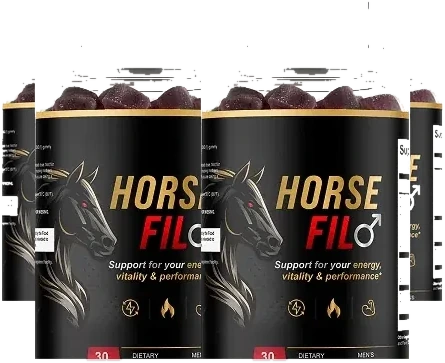
A gummy with the amounts printed on it
Horsefil is a once-daily men's vitality gummy that discloses each ingredient and its per-serving amount, so you can check it against the doses in this article.
Read the Horsefil Breakdown