Do Testosterone Boosters Really Work? A Careful Look at the Trials
Quick Answer: Do Testosterone Boosters Really Work?
Mostly not the way the packaging implies, with a few honest exceptions. Do testosterone boosters really work? A small number of ingredients — ashwagandha, fenugreek and tongkat ali among them — have randomised human trials reporting modest increases, and those increases turn up mainly in men who were stressed, carrying extra weight, or starting from a low-normal baseline. Most of the rest of the category rests on cell studies, animal work or nothing published at all, and correcting a genuine zinc or vitamin D shortfall is better described as filling a gap than as boosting anything.
- Strongest case: correcting a real nutrient deficiency, not stacking herbs on a full tank.
- Most-studied herb: ashwagandha, several small trials, modest reported changes.
- Repeated failure: tribulus terrestris, popular for decades and consistently negative.

What a testosterone booster actually is
The phrase describes a marketing category, not a pharmacological class. A testosterone booster is a dietary supplement sold with the suggestion that it will raise your own hormone production. It contains no testosterone, because a product containing testosterone would be a prescription medicine. What it contains instead is some combination of herbs, amino acids, vitamins and minerals chosen because each has, at some point, been associated with male hormonal health in a paper somewhere.
That distinction explains most of the confusion in the category. Nothing on the shelf is a weak version of prescribed testosterone. These are nutritional and botanical products whose effects, where they exist, are indirect: supporting the raw materials of hormone production, blunting the stress response that suppresses it, or improving sleep and body composition, which are themselves upstream of it.
The second thing worth naming early is that men rarely arrive at this shelf because of a number. They arrive because of flat afternoons, training that stopped producing results, a shorter fuse and less interest in sex. Those experiences are real and worth taking seriously, but they map onto a testosterone reading far more loosely than the marketing suggests. Plenty of men with those symptoms have perfectly ordinary hormone levels, and the cause is somewhere else entirely.
The ingredients that have human trials behind them
Start with the honest positives, because a fair appraisal has to acknowledge them.
Ashwagandha (Withania somnifera) is the most studied herb in the category. Several small randomised trials, usually running eight to twelve weeks at 300 to 600 mg a day of a standardised root extract, have reported modest increases in testosterone alongside reductions in perceived stress and cortisol. The signal is consistent enough to take seriously and weak enough to stay cautious about: the studies are small, several were funded by the companies that make the extract, and the men enrolled were often stressed, sedentary or overweight, which is exactly the group with the most room to move.
Fenugreek seed extract, typically around 500 to 600 mg a day, has produced genuinely mixed results. Some trials report higher free testosterone or better scores on sexual function questionnaires; others find no hormonal change at all while participants still report feeling better. Both outcomes are published, which is the definition of an inconsistent evidence base.
Tongkat ali (Eurycoma longifolia) has a smaller but interesting body of work, again clustered in men who were stressed or starting low. Zinc and vitamin D belong in a separate box: both are genuinely required for normal hormone production, and both show effects mainly when someone was short of them to begin with. That is repletion, not enhancement, and it is the single most defensible mechanism in the whole category.
The ingredients that keep failing when they are tested
Now the other column, which is longer.
Tribulus terrestris is the clearest case. It has been in these formulas for decades and has been tested repeatedly in men, and the trials keep coming back without a measurable change in testosterone. Some studies do report improvements in sexual satisfaction, which may be real and may be unrelated to hormones. Its continued presence on labels is best understood as brand recognition rather than evidence.
D-aspartic acid followed a familiar arc: an early small study reported a rise, the finding attracted enormous attention, and subsequent trials in trained men found no increase, with at least one reporting a decrease at higher intakes. Maca root is another instructive one. It has reasonable small-trial data for libido and mood, and those trials consistently report no change in testosterone. That combination is a useful reminder that feeling better and measuring higher are separate outcomes, and the second is not required for the first.
Then there is the long tail: ingredients present at token amounts, herbs studied only in rodents, and proprietary blends that hide every dose behind a single total weight. If a label will not tell you how much of each active it contains, no one can compare it against the trials, which is usually the point.
Judge any formula by its panel
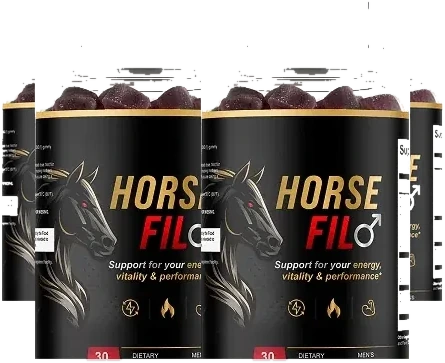
Horsefil is a men's vitality gummy built around energy, stamina and blood-flow support rather than a hormone claim — and every active is named with its amount, so you can hold it against the studies yourself. If you are weighing up where to buy a testosterone booster or any men's formula online, that panel is the first thing to check.
See Horsefil at the Official StoreHow big are the effects, really?
This is where most articles go quiet. When a trial does report an increase, it is usually a modest percentage shift in a value that moves substantially on its own from hour to hour and day to day. Testosterone peaks in the morning and declines across the day, varies with sleep, illness, alcohol and recent training, and is measured by assays that do not always agree between laboratories. A modest reported change sits inside a fairly noisy signal.
That matters for what you should expect to feel. Ask do testosterone boosters really work and a useful answer has to specify three things: for which men, measured how, and compared against what. A statistically detectable change in a group average is not the same as a change you would notice in your own week. Men who do notice something during a supplement trial period often improved several things at once, which is why controlled studies exist. We work through the size of these reported changes in detail in our piece on how much testosterone boosters increase testosterone.
The evidence, ingredient by ingredient
| Ingredient | Typical studied daily dose | What human trials report | Evidence strength |
|---|---|---|---|
| Ashwagandha root extract | 300–600 mg standardised | Modest increases in several small trials, mostly in stressed or overweight men | Promising, small, often sponsor-funded |
| Fenugreek seed extract | 500–600 mg | Some trials report higher free testosterone or libido scores; others report no change | Inconsistent |
| Tongkat ali extract | 200–400 mg | Increases reported mainly in men with low baseline or high stress | Early and small |
| Zinc | Dietary adequacy; repletion if short | Supports normal production when intake was inadequate; little effect when status is already fine | Good, for deficiency only |
| Vitamin D | Repletion doses in deficient men | Trials conflict; some report a rise in deficient men, larger trials report no change | Conflicting |
| D-aspartic acid | ~3 g | Early positive result not replicated; later trials report no rise | Weak to negative |
| Tribulus terrestris | 500–1500 mg | Repeatedly no measurable hormonal change in men | Negative |
| Maca root | 1.5–3 g | No change in testosterone; some small-trial support for libido | No hormonal effect |
Why so many products look better than their evidence
Four habits do most of the work, and once you can see them the category becomes much easier to read. Turning that scepticism into a purchase decision is the job of our 2026 testosterone booster buyer’s guide.
Ingredient evidence borrowed for the finished product. A blend containing ashwagandha is not the same thing as the trial that tested ashwagandha, especially at a fraction of the studied dose. The citations on a sales page almost always belong to single ingredients, not to the product being sold.
Underdosing behind a familiar name. Recognition sells, so labels list impressive botanicals at amounts far below anything studied. This is why the milligram figure matters more than the ingredient list.
Populations quietly swapped. A result found in men with low baseline levels gets marketed to men whose levels are normal. The trial was honest; the extrapolation is not.
Outcomes quietly swapped. A study measuring fatigue or sexual satisfaction becomes a hormone claim in the advertising. Those questionnaires are legitimate research instruments, but they did not measure the thing the headline says they measured.
The category is not fake so much as oversold. A handful of ingredients have real, modest data in specific groups of men, and that gets sold as a universal effect in every man who reads the label.
The levers that outperform most bottles
Any fair appraisal has to say this part out loud, because it is where the largest and best-documented effects live.
Sleep is first. A controlled study in healthy young men found that a week of restricted sleep measurably lowered their daytime testosterone. That is a bigger, better-established effect than anything reported for a herbal capsule, and it costs nothing.
Body composition is second. In men carrying significant excess weight, losing a meaningful amount of it is associated with higher measured testosterone, and it is one of the few interventions with consistent results across studies. Resistance training, sensible alcohol intake and treating conditions such as sleep apnoea belong in the same tier.
None of this is exciting, and none of it is sold in a bottle. But when men ask whether testosterone boosters are worth it, the honest answer is that they are worth considering after the four things above are in reasonable shape, not instead of them.
What testosterone boosters cannot do
Some limits are worth stating without hedging.
They cannot diagnose or treat anything. Clinically low testosterone is a medical condition, identified with repeat morning blood tests and interpreted alongside symptoms by a clinician. If that is what is going on, a supplement is not the answer and delaying an assessment has a cost.
They cannot substitute for prescribed treatment, and nothing in this article should be read as a reason to stop or change a medication. They cannot be assumed harmless either: herbal ingredients interact with real drugs, some products in the broader men's category have been found adulterated with undeclared prescription compounds, and more of a botanical is not safer than less.
They also cannot deliver a number. No supplement label can promise where your reading will land, because your reading depends on your sleep, weight, age, medications, the time of day you gave blood and the laboratory that ran it. Any product that quotes an expected increase is telling you about its marketing, not about you.
Medical note: this article is general information, not medical advice. Persistent fatigue, low libido or erectile difficulty deserve a proper assessment, because they can point to something treatable that a supplement will not address. Speak to a healthcare professional before starting any supplement, particularly if you take medication.
Where Horsefil fits, and where it does not
Straight answer: Horsefil is a men's vitality gummy, not a testosterone booster, and we would rather say that than blur the line to catch the search. Its formula is built around L-citrulline and L-carnitine with maca root, panax ginseng and rhodiola rosea, and it is sold for everyday energy, stamina and performance support.
Those ingredients were chosen for different jobs. L-citrulline feeds the nitric-oxide pathway behind healthy blood flow. Panax ginseng and rhodiola have human data for fatigue. Maca has small-trial support for libido, with no hormonal change reported. If you came here hunting the best testosterone booster to buy online and what you actually want is steadier daytime energy, that is the shelf this sits on. If you want a hormone number to move, the honest first step is a blood test and a conversation, not a purchase. Our companion piece on whether testosterone boosters are legit takes the same question from the regulatory angle.
Frequently asked questions
Do testosterone boosters really work for everyone?
No. The men most likely to see a measurable change are those starting from a low-normal level, carrying extra weight, sleeping badly or short on zinc or vitamin D. In men whose levels are already comfortably normal and whose nutrient status is fine, most trials report little or no change. A product cannot fill a gap that is not there.
Which testosterone booster ingredient has the most human evidence?
Ashwagandha root extract has the largest number of randomised human trials among the common herbal ingredients, typically at 300 to 600 mg a day of a standardised extract for 8 to 12 weeks. The reported changes are modest, the studies are small, and several were funded by ingredient suppliers, so the finding is promising rather than settled.
Does tribulus terrestris raise testosterone?
Human trials have repeatedly failed to show that tribulus terrestris raises testosterone, despite decades of marketing that says otherwise. It remains one of the most common ingredients in the category and one of the least supported. Its presence on a label is a reasonable signal that the formula was built for recognition rather than for evidence.
Can a supplement replace testosterone therapy?
No. Clinically low testosterone is a medical condition diagnosed with repeat morning blood tests and managed by a clinician, and no dietary supplement is a substitute for that assessment or that treatment. Supplements in this category are sold to support normal function, not to treat a diagnosed hormone deficiency.
Scientific references
- NIH NCCIH — Ashwagandha: Usefulness and Safety
- NIH Office of Dietary Supplements — Zinc Fact Sheet for Health Professionals
- Lopresti A.L. et al. — A randomized, double-blind, placebo-controlled, crossover study examining the hormonal and vitality effects of ashwagandha (Withania somnifera) in aging, overweight males, American Journal of Men's Health (2019)
- Mayo Clinic — Testosterone levels and ageing in men
- NIH NCBI Bookshelf — Physiology, Testosterone (StatPearls)
Read the label, then decide
Five named actives for everyday energy, stamina and blood-flow support, printed with their amounts instead of pooled into a proprietary blend. Check it against the studies before you decide whether it belongs in your routine.
Check Horsefil at the Official Store