Are Testosterone Boosters Legit? Separating the Claim From the Data
Quick Answer: Are Testosterone Boosters Legit?
Most are legal, legitimately manufactured products sold with claims that run well ahead of their evidence, which is a different problem from fraud. Are testosterone boosters legit? As products, usually yes: they contain what they say and they are made in inspected facilities. As solutions to the problem they advertise, mostly no — a small number of ingredients have modest randomised human data, many have none at all, and the marketing rarely tells you which one you are holding. Judge the individual label and its named doses, not the category.
- Legal: yes, supplements are sold without pre-market approval of effectiveness.
- Honest labelling: varies, and proprietary blends make it unverifiable.
- Effective: for a minority of ingredients, modestly, in specific men.
Three different questions hiding inside one word
Asking whether something is legit collapses three separate questions, and separating them is most of the work.
Is it legal and properly made? For the large majority of products from established sellers, yes. They are manufactured in facilities subject to good manufacturing practice requirements, and they contain the ingredients they list.
Is the label accurate about amounts? Sometimes, and it is not always possible to tell. A label listing each active with its milligram amount can be checked against published research. A proprietary blend, which pools several ingredients under one combined weight, cannot be checked by anyone.
Does it do what the advertising implies? This is the question everyone is actually asking, and it is the one where the category is weakest. Legal and well-made says nothing about effect, and the first two answers are routinely used to imply the third.
So anyone asking are testosterone boosters legit is really asking all three at once, and the answers point in different directions. That is why a single verdict on the category is close to useless, and why the rest of this article works through the claims one at a time instead.
How the category is actually regulated
The regulatory structure explains a great deal of what you see on these pages.
Dietary supplements are not approved for safety or effectiveness before they go on sale. Manufacturers carry responsibility for their own products, and regulators generally act after a problem is identified rather than before a product launches. That is a deliberate policy choice, not a loophole, but it means the burden of judgement lands on you at the point of purchase.
What products may say is constrained. They can make structure and function claims — supports energy, supports normal hormone production — but they may not claim to diagnose, treat, cure or prevent a disease. Every such claim must carry the disclaimer noting it has not been evaluated by the Food and Drug Administration. That disclaimer at the bottom of a sales page is not a formality; it is the legal boundary of what the product is allowed to be.
There is also a real safety issue at the edge of this category. Regulators maintain a public database of tainted products marketed as supplements, and men's sexual performance products have repeatedly appeared in it, adulterated with undeclared prescription compounds. That is a genuine reason to buy from an official store rather than a marketplace listing of unknown provenance.
Five claims that do not survive contact with the data
These recur across the category with remarkable consistency.
Clinically proven. Not a regulated phrase. It usually refers to a study of one ingredient rather than the finished blend, often at a dose the product does not contain. The useful follow-up questions are: which product was tested, in how many people, for how long, and who funded it.
Doctor formulated. Describes who was in the room during product development, which is not an evidence claim at all. A qualified person can formulate a product with weak ingredients.
FDA registered facility. Facility registration means the manufacturing site is known to the regulator. It is not an approval, an endorsement, or a statement about whether the product works.
Natural, therefore safe. Botanical ingredients are pharmacologically active. Several interact with anticoagulants, blood-pressure drugs and erectile-function medication, and some carry dose ceilings. Natural describes an origin, not a safety margin.
Proprietary blend. Presented as protecting a formula from copycats; in practice it hides the amount of each ingredient. Ingredients are listed in descending order by weight, which gives a hint, but nothing more. If a formula is worth buying, its doses are worth printing.
The label is the honest part
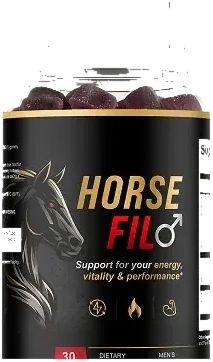
Horsefil is a men's vitality gummy for energy, stamina and blood-flow support, with each active named and measured rather than pooled into a blend. If you are working out where to buy a men's supplement without guessing what is inside it, start by reading the panel.
See Horsefil at the Official StoreClaim versus data, side by side
| Marketing claim | What is true in it | What it leaves out | Verdict |
|---|---|---|---|
| Clinically proven formula | An ingredient somewhere in it has been studied | The finished product was usually never tested, often at a lower dose | Borrowed evidence |
| Doctor formulated | A qualified person was involved | Says nothing about trial results | Not an evidence claim |
| Made in an FDA registered facility | The site is registered with the regulator | Registration is not approval or endorsement | Misread as a seal |
| All natural, so it is safe | The ingredients are plant derived | Botanicals interact with real medicines and have dose limits | False reassurance |
| Proprietary performance blend | The named ingredients are present | The amount of each one is concealed | Unverifiable |
| Raises testosterone naturally | A few ingredients have modest trial data | Baseline decides most of it; several popular ingredients test negative | Overstated |
The uncomfortable truth about this category is that a product can be entirely legitimate and still be a poor purchase. Legal, clean and accurately labelled are necessary conditions. None of them is evidence that anything will change.
Where the evidence genuinely is
A fair myth-check has to name the honest parts too, because dismissing everything is as lazy as believing everything.
Ashwagandha root extract has the largest number of randomised human trials in this space, generally at 300 to 600 mg a day of a standardised extract over eight to twelve weeks, with modest reported effects on stress and hormone measures. Fenugreek has a mixed but real literature. Tongkat ali has early data, mostly in men who were stressed or starting low.
Correcting a genuine zinc or vitamin D shortfall is the most defensible mechanism in the category, because both nutrients are required for normal production and both show effects mainly in men who were short of them. Meanwhile L-citrulline has solid data for blood flow, and panax ginseng and rhodiola have human trials for fatigue — none of which are hormone claims, but all of which are relevant to the symptoms that bring men here.
The opposite list matters just as much. Tribulus terrestris has been tested in men repeatedly without showing a hormonal change. D-aspartic acid produced an early positive result that later trials did not reproduce. Maca root consistently shows no change in testosterone while showing some effect on libido. We work through each of these in detail in our piece on whether testosterone boosters really work.
What a credible product looks like
Rather than asking whether the category is legitimate, it is more useful to have a checklist for an individual product.
Named doses for every active. No proprietary blends. If you cannot compare it to a study, you cannot judge it.
Doses in the studied range. A famous botanical at a token milligram amount is decoration. This is the single most common failure.
Independent testing. Third-party verification of identity and purity is genuinely valuable in a category with a documented adulteration problem. It confirms what is in the bottle, not that it works.
Language that stays inside the law. Support and may help are the honest verbs. Cure, treat, reverse and guaranteed are not, and a page that uses them is telling you how much attention it pays to the rules.
Clear terms and a real seller. A visible refund policy, contactable support, and purchase through the official store rather than an unknown marketplace listing. Given the adulteration record in men's products, provenance is a safety question as well as a consumer one.
What this article cannot tell you
The same standard we apply to sales pages applies here.
It cannot tell you whether a specific product works, because that would require a trial of that product, and almost none exist. It can only tell you how to check whether its ingredients and doses match published research.
It cannot give you a verdict on your own case. We do not know your baseline, your medications or your symptoms, and general information is not personal advice.
It cannot claim that any supplement treats, cures, prevents or reverses a medical condition, because none of them do. Clinically low testosterone is a medical diagnosis that belongs with a clinician, not with a label. Where the evidence is thin we have said so, and across much of this category it is thin.
And this page is not neutral. We are an affiliate publisher and we earn a commission if you buy through our links. That is disclosed at the bottom of every page here, and the appropriate response is to check the sources we cite and read the panel yourself. Our piece on how long these products take to kick in sets out how to run that test fairly once you have chosen one.
Medical note: this article is general information, not medical advice. Be particularly careful with men's performance products bought from unfamiliar sellers, since undeclared prescription compounds have been found in some of them and those can be dangerous alongside nitrates and blood-pressure medication. Speak to a healthcare professional before starting any supplement.
Where Horsefil stands on this
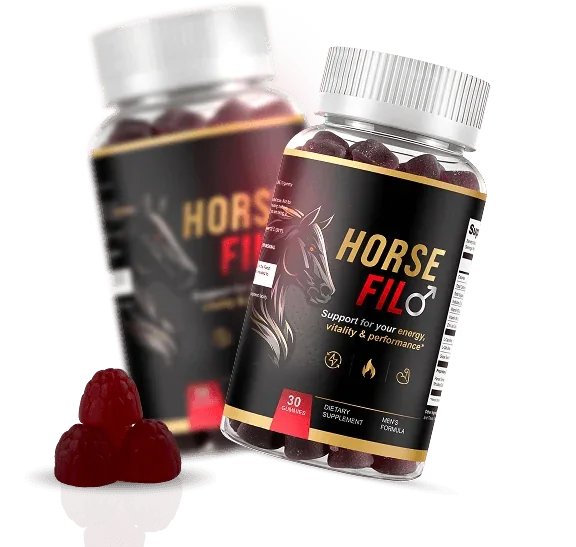
Applying our own checklist: Horsefil is a men's vitality gummy rather than a testosterone booster, and it does not make a hormone claim. The actives are L-citrulline and L-carnitine alongside maca root, panax ginseng and rhodiola rosea, aimed at everyday energy, stamina and blood-flow support.
We would rather be judged on that description than on a bigger one. The ingredients have human data for the things they are being sold for — circulation, fatigue, everyday stamina — and no data for changing a laboratory value, which is why we do not say they do. If you arrived searching for the best over the counter male testosterone booster, the honest steer is that a hormone question is answered by a blood test and a clinician, and an energy question is answered by comparing panels. Our piece on how much these products raise testosterone covers the first half of that in detail.
Frequently asked questions
Are testosterone boosters legit products or a scam?
Most are legal, legitimately manufactured products sold with claims that outrun their evidence. That is a different problem from fraud. A few ingredients have randomised human data behind modest effects, many have none, and the marketing rarely distinguishes between the two. Judge an individual product by its named doses and the studies behind those specific ingredients, not by the category as a whole.
Are supplements approved by the FDA before they are sold?
No. Dietary supplements are not approved for safety or effectiveness before they reach the market. Manufacturers are responsible for their own products, and regulators generally act after a problem appears. This is why phrases like FDA registered facility describe where something is made rather than any official endorsement of what it does.
What does clinically proven mean on a supplement label?
Usually far less than it sounds. The phrase is not a regulated term, and it most often points to a study of a single ingredient rather than the finished blend, sometimes at a much higher dose than the product contains. Ask which product was tested, in how many people, for how long, and who paid for it.
Why do proprietary blends make a product hard to judge?
Because a proprietary blend lists ingredients under one combined weight without saying how much of each is present. That makes it impossible to compare the product against the doses used in published trials. The listing order gives a rough clue, since ingredients appear by weight, but the actual amounts stay hidden.
Scientific references
- NIH Office of Dietary Supplements — Dietary Supplements: What You Need to Know
- NIH NCCIH — Using Dietary Supplements Wisely
- Clemesha C.G., Thaker H., Samplaski M.K. — ‘Testosterone boosting’ supplements composition and claims are not supported by the academic literature, World Journal of Men's Health (2020)
- Mayo Clinic — Dietary supplements: what to know before you buy
- Harvard T.H. Chan School of Public Health — Vitamins and Minerals
Check it against the checklist
Named actives with printed amounts, plain support language, and purchase through the official store. Hold Horsefil to the same standard as anything else on the shelf.
Check Horsefil at the Official Store